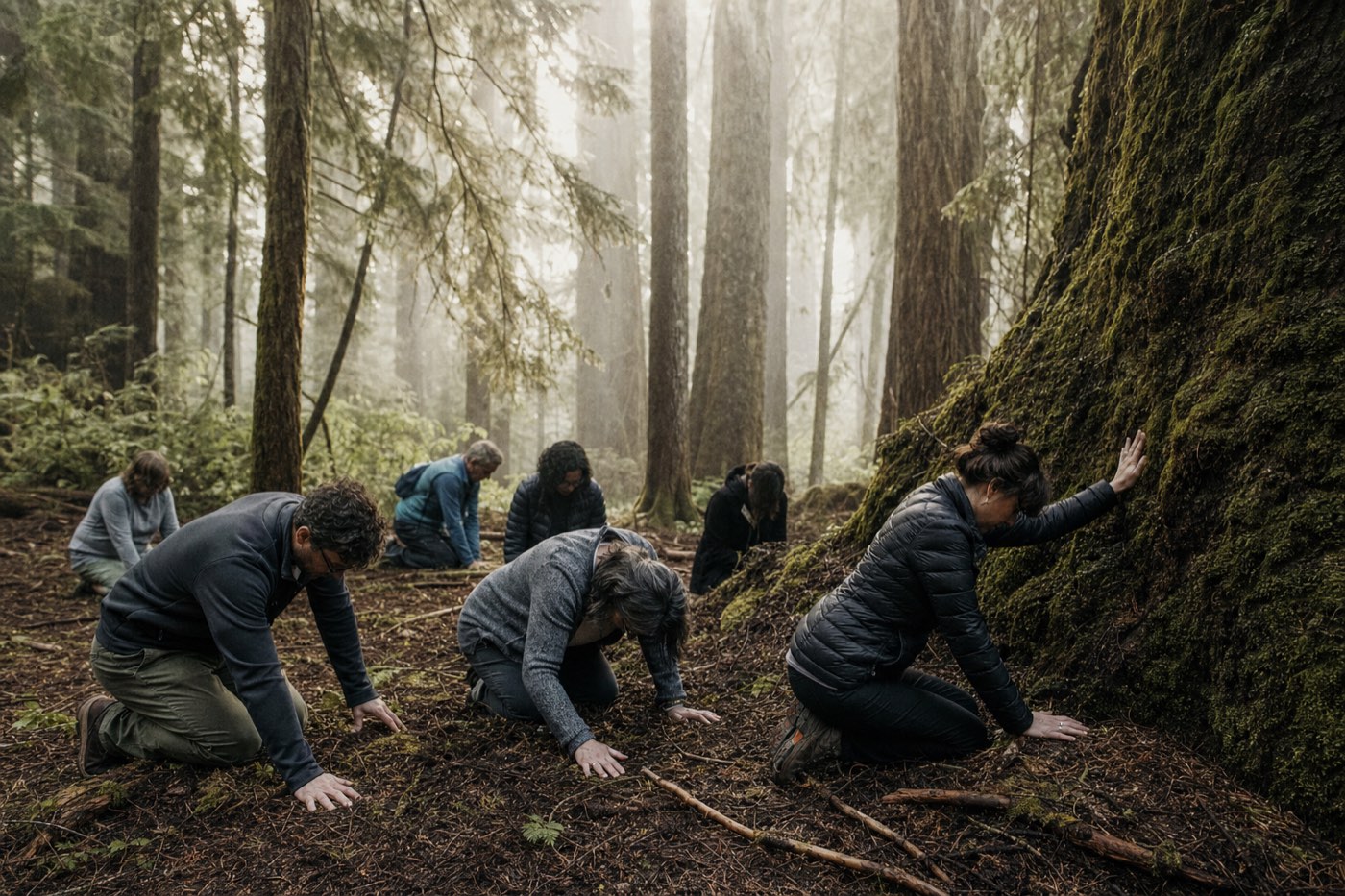
The Communion of the Living Earth teaches something a great many traditions have taught: that the planet is not a stage for life but a single living being, a superorganism of which every creature is a cell, and that the right relation to it is worship. On the theology itself, few of the scholars I spoke to had much quarrel; the intuition is ancient and, in an age of ecological dread, unsurprising in its resurgence.
The friction is over the second claim. The Communion describes its practice as "indigenous" — a return, it says, to the earth-worship that preceded the world's disenchantment. Its membership is largely not Indigenous, and Indigenous scholars I interviewed were careful but clear: that living traditions are not a public commons to be adopted by the spiritually homesick, that "indigenous" is not a vibe, and that a movement of settlers reaching for the word to authorize a new religion is repeating, in a gentler key, an old pattern of taking. Several were at pains to separate their critique of the borrowing from the sincerity of the borrowers, who are, they stressed, mostly grieving people looking for a way to belong to the living world.
That grief is the part the Communion gets right, and it is not small. Its members are people undone by what is happening to the planet, looking for a relationship to it deeper than guilt. The order gives them one — a living Earth to love, a cell's place within it, a liturgy for their sorrow. Whether it can offer that without laying claim to what isn't theirs is the open question, and it is, this reporter would gently note, exactly the question the more honest movements in this space have learned to sit inside rather than answer too quickly.