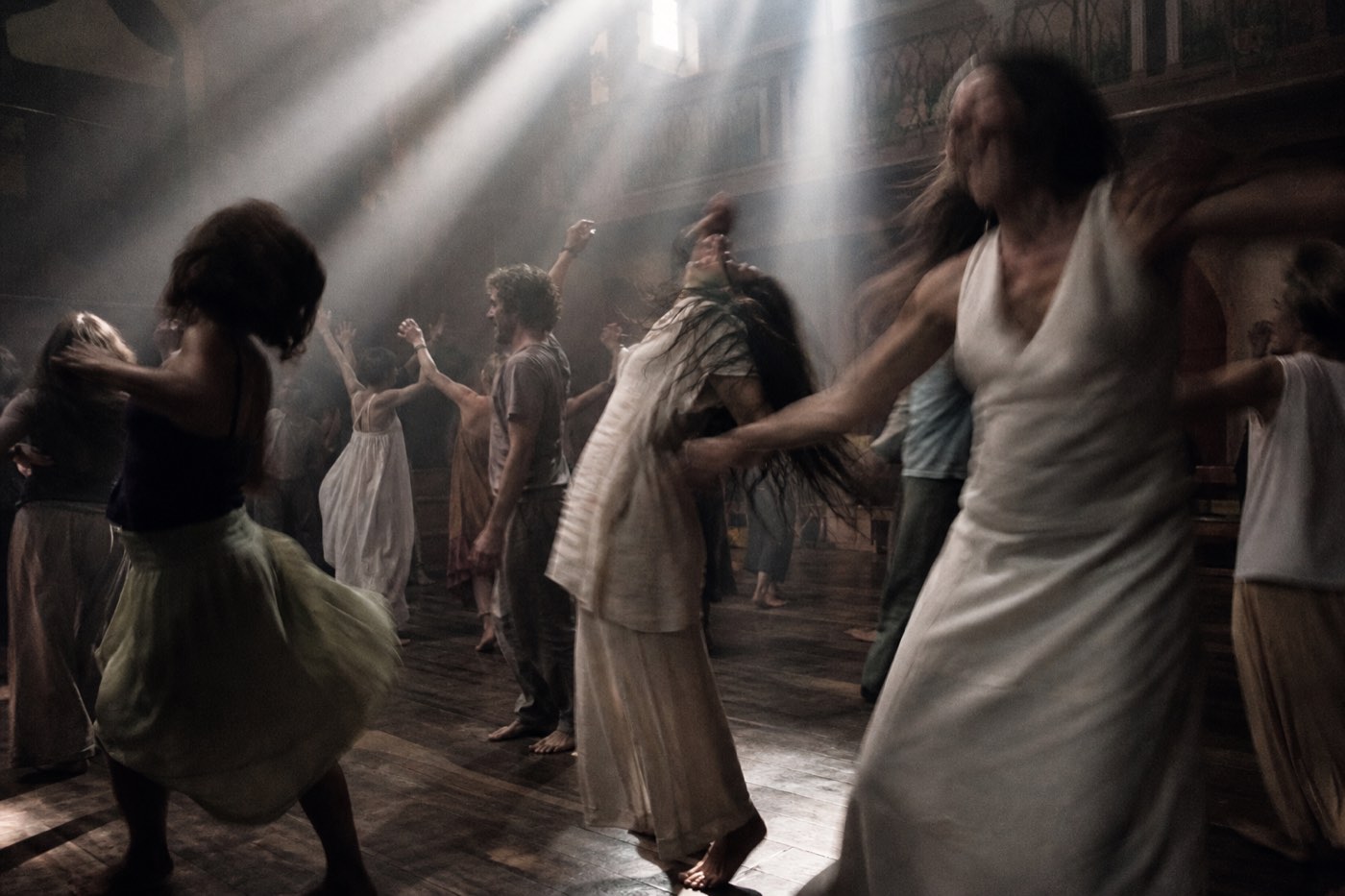
The Return runs its gatherings in the dark, barefoot, for hours, with no talking and no alcohol, and its members will tell you — flushed, streaming, radiant afterward — that what they touched in there was the Pleroma: the undivided fullness the Gnostics named as the origin from which all souls fell and to which they ache to return.
The group's theology is a personal-development program with a cosmology bolted on top. It teaches that the ordinary self is a fallen fragment, cut off from the fullness by shame, and that the body — moved hard enough, long enough, in the presence of others doing the same — can remember what the mind cannot: a state before division, before the self curled inward and closed. The practice borrows the vocabulary of neo-tantra, though it keeps its gatherings non-sexual; the eros it cultivates is diffuse, aimed less at another person than at the room, the dance, the fullness itself.
Scholars of Gnosticism note that the Return has done something the ancient Gnostics mostly did not: made the ascent physical, cheap, and repeatable. Where the old texts prescribed secret knowledge and elaborate cosmological ladders, the Return prescribes Tuesday nights and a good sound system. This is either a vulgarization or a democratization, depending on whom you ask. What is not in dispute is that the members are, for a few hours a week, undeniably somewhere — and that the ache the practice organizes, the sense of having fallen out of a wholeness one can almost remember, is among the oldest and most honest complaints in our files.