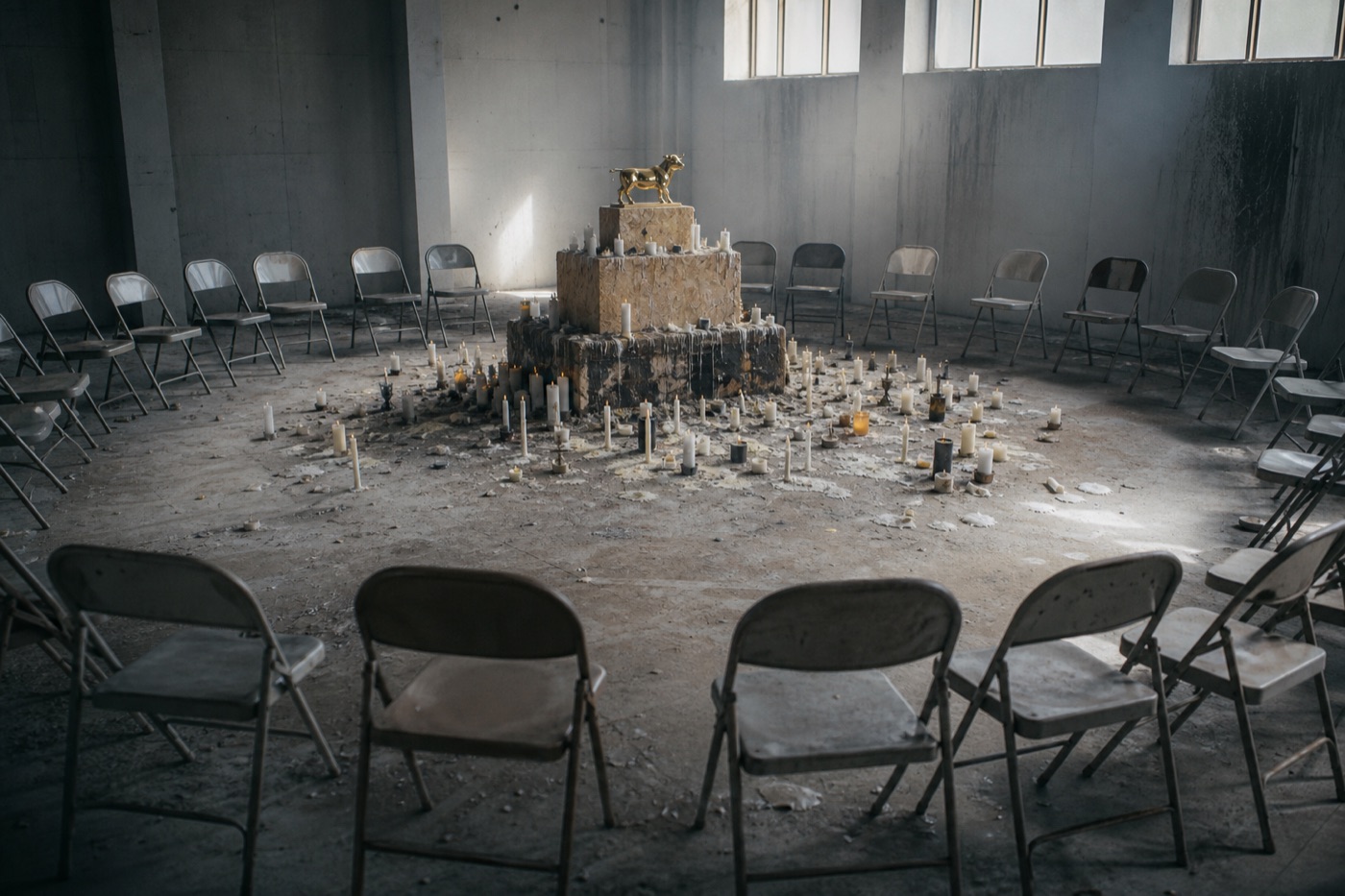
The Herd of God does not call its central ritual a ceremony. It calls it a launch, and it numbers the attempts. This is a useful habit, because it means the group keeps its own failures on the record, and there are two of them.
The first attempt was public and slow. For roughly four years, Horst worked the revival circuit, drawing crowds and, he believed, drawing power from them — "charging," in the group's language, the sleeping god with the energy of ecstatic worship. It did not take. Members who were present describe a long plateau followed by a quiet abandonment. Horst has since said the crowds were the wrong instrument: mass enthusiasm, he concluded, cannot substitute for a disciplined ascent by people trained to make it.
The second attempt was private, small, and — according to three people with knowledge of it — fatal. Horst had by then assembled a circle of what the group calls adepts, each said to embody one of the eight "angels" the ritual requires. The attempt, they say, reached its final stage and stopped. In the course of it, one participant died. The Herd disputes the framing of the event and declines to discuss the death; it did not respond to specific questions about the circumstances. (For what the group has confirmed, see the Ends desk.)
What the group will discuss is the lesson it drew. Horst describes receiving, after the second failure, a "third transmission" — an instruction that the ritual had never been missing a technique, but a constituency. A circle of adepts, however skilled, could not stand in for humanity. The rite, he now teaches, requires humanity itself, or a representative sample of it.
The third attempt, announced for this year, is the group's answer to that instruction. It will be attempted with what the Herd calls an expanded congregation — a body of new initiates who serve, in the group's telling, as "delegates of humanity," present to authorize the crossing on everyone's behalf. Scholars of new religious movements note the structure is efficient in more than one direction: the delegates are also the recruits.
Whether the third launch succeeds is not a question this publication can adjudicate. What can be said is that the group has built, into its own theology, a reason each failure was necessary — a feature that tends to make movements more durable, not less.