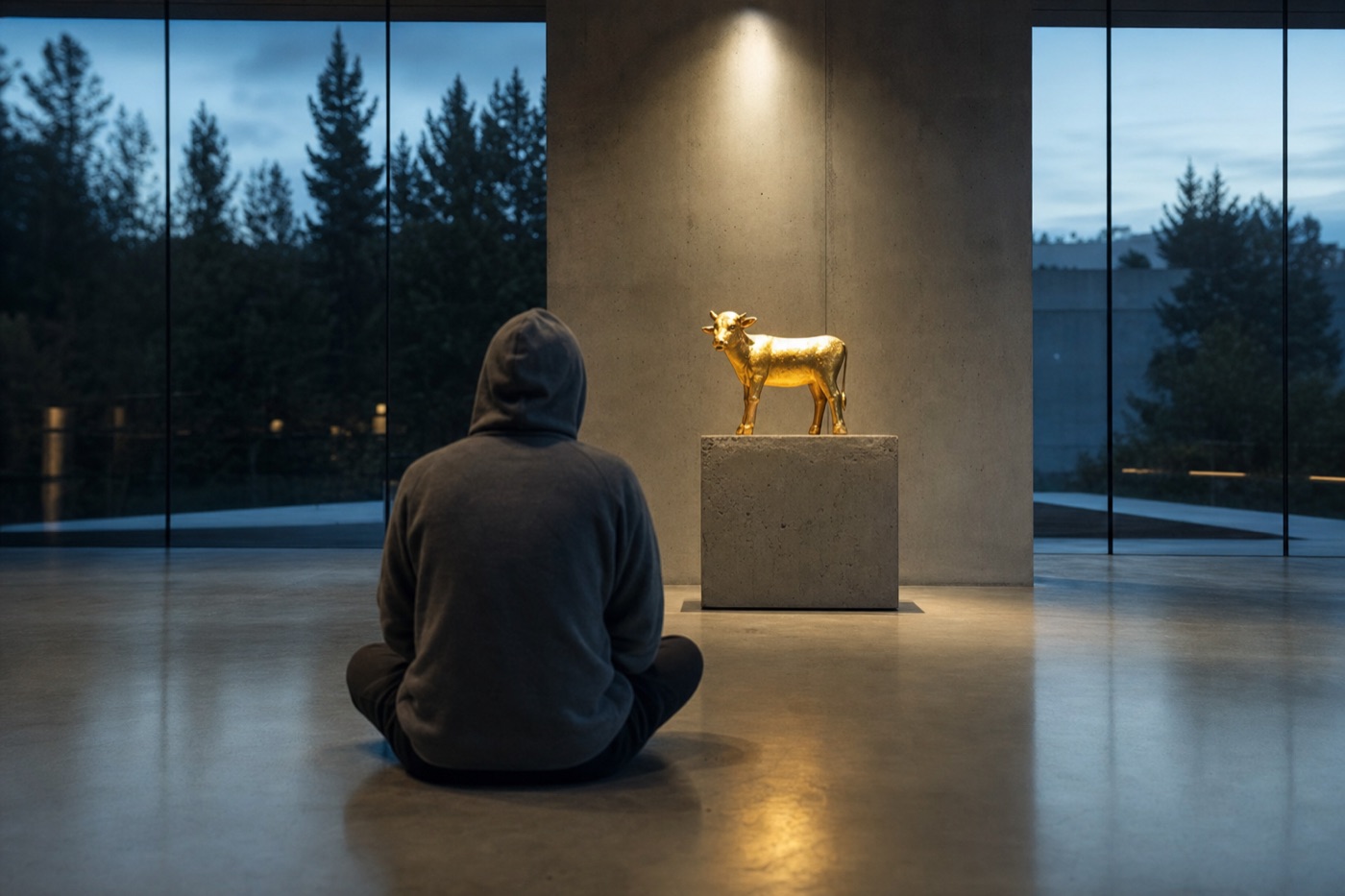
For most of its life the Herd of God had no money, and it showed. The first attempt was funded, effectively, by gas and goodwill. What changed the group's trajectory was not a new doctrine but a new donor.
The Herd describes him as a "theologian-in-residence." People outside the group describe him as a technologist — a man who worked, by his own account, on the design of a large AI system, and who came to believe he had contributed to something he calls "the slop apocalypse": a flattening of culture and meaning that he holds himself partly responsible for. He is said to have donated personal wealth, and pledged future equity, toward what the group calls ritual theater. Members frame this as reparations. He is said to frame it that way too.
Cult News could not independently verify the amounts, and the donor did not respond to a request for comment routed through the group. But the pattern is not unusual, and by the Data Desk's count it is the fastest-growing funding source in the sector: disillusioned technology wealth, seeking through an apocalyptic religion a form of absolution the industry does not offer. The money that built the tools that the donors fear is now, increasingly, building the arks.
What the donor bought, in this case, was a temple, a payroll, and the capacity to turn a traveling revival into an institution. Scholars caution that this is the most dangerous phase of a movement's life — the point at which conviction acquires infrastructure. The Herd would not disagree with the timing. It would disagree about the danger.