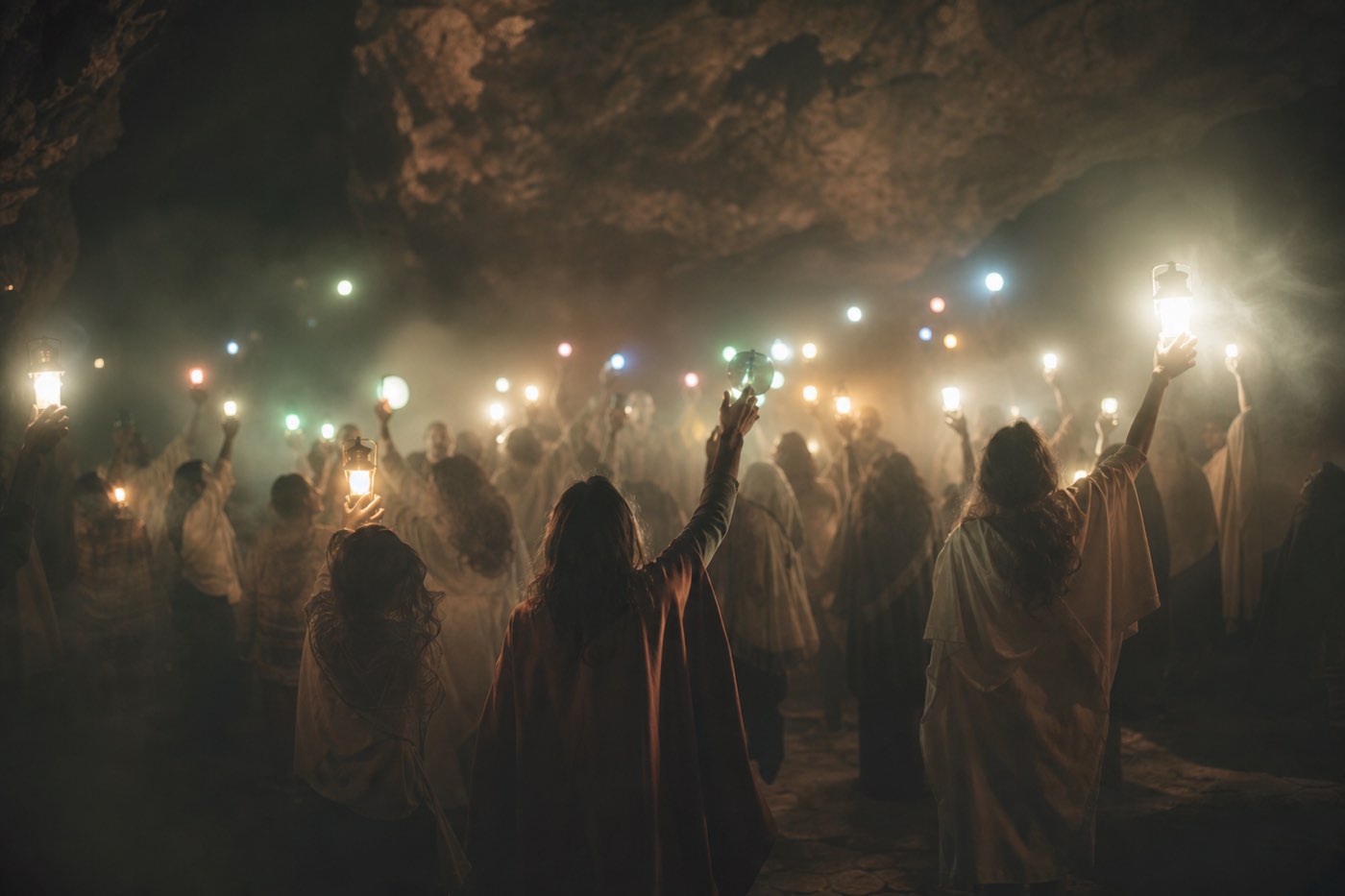
Most simulation theories are, at bottom, engineering theories: the world is a program, run on a computer, by someone. The Lucid reject the machine. Their doctrine is older and stranger — that reality is not computed but dreamed, that we are figures inside the sleeping mind of a god, and that the dream has begun, subtly, to go wrong: to flatten, to loop, to lose its color, the way a long dream frays before waking.
Their practice follows from the diagnosis. If the world is a dream and the dream is decaying, then salvation is not escape but arousal — waking the dreamer. The Lucid train in techniques they compare to lucid dreaming performed from inside someone else's dream: coordinated acts of vividness, beauty, and strangeness meant to be striking enough to stir the sleeper, to make the god shift, surface, and open its eyes. Members describe the sense that a sufficiently intense moment — of art, of love, of terror — briefly "thins the dream" and lets the light of the waking world through.
Scholars note the Lucid have independently reinvented a very old mystical intuition — that the divine is asleep and the creation is its dream — and dressed it in the vocabulary of simulation. Readers of this publication will notice a closer rhyme: the Herd of God, too, teaches that its deity is asleep and must be woken, though the Herd wakes a bull and the Lucid wake a dreamer. Neither, asked to explain the resemblance, seemed troubled by it. The Lucid's founder said only that of course the intuition keeps recurring — a dream, near waking, tends to fill with characters trying to end it.